Sculptures 

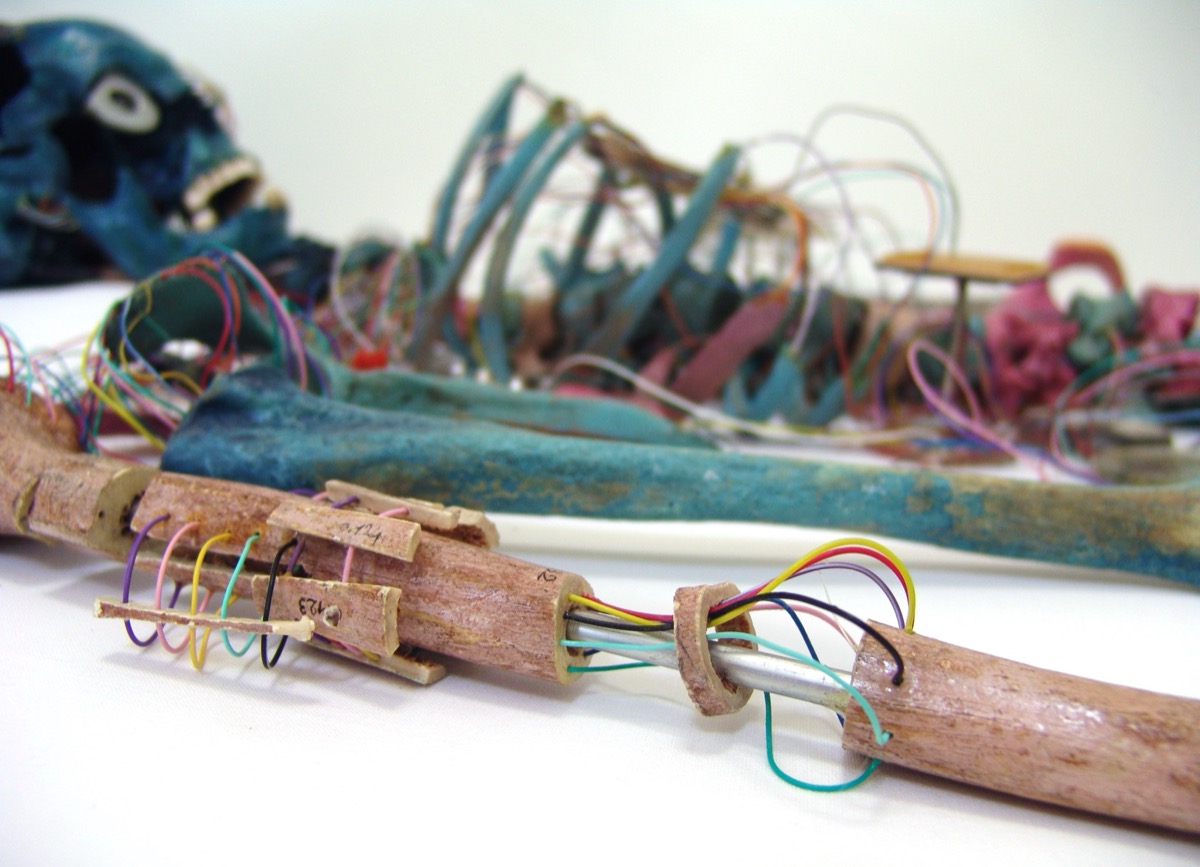
Relique de l'homme bionique

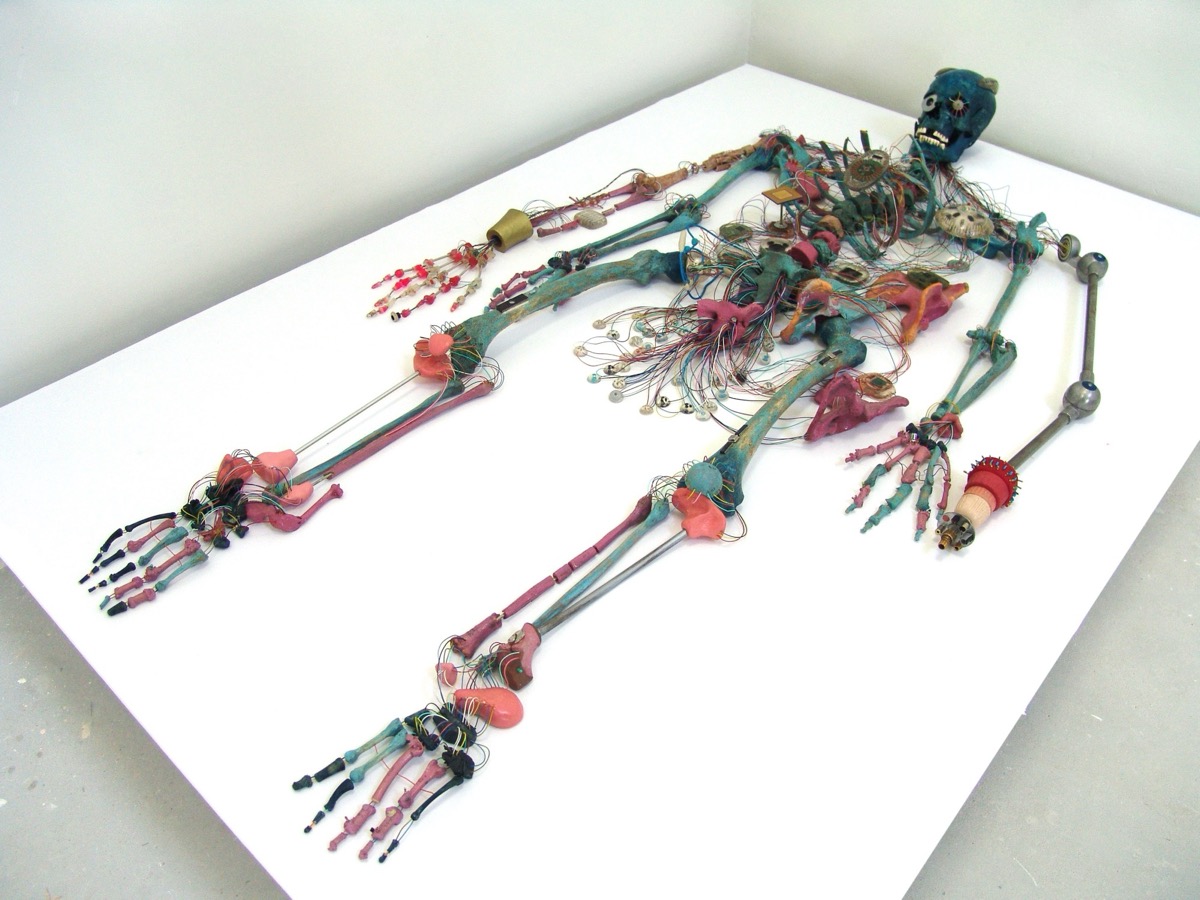
Relic of the bionic man

2001
Os humains, animaux et synthétiques, composants électroniques /
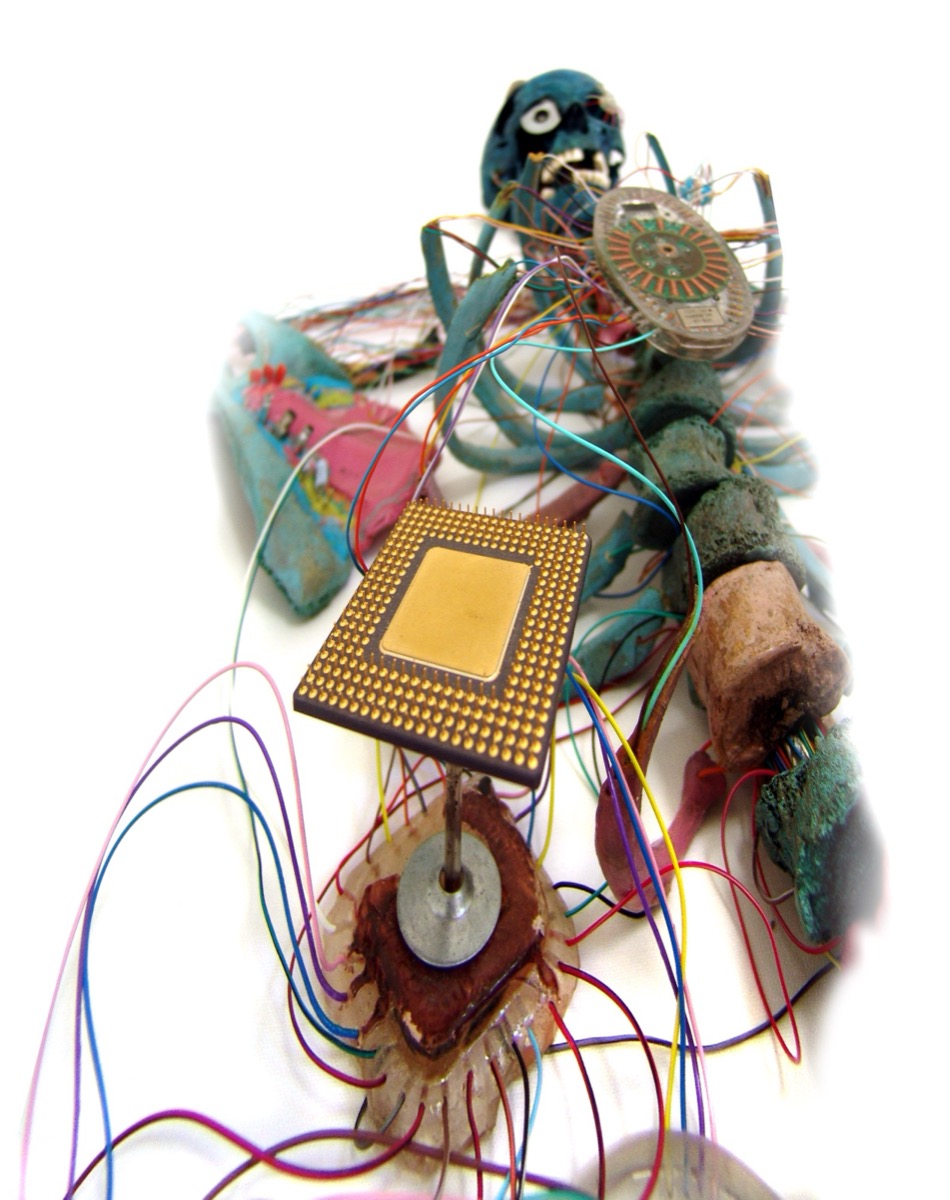
Human, animal and synthetic bones, electronic components
200 x 140 x 80 cm /  80 x 55 x 20 in

EN

FR

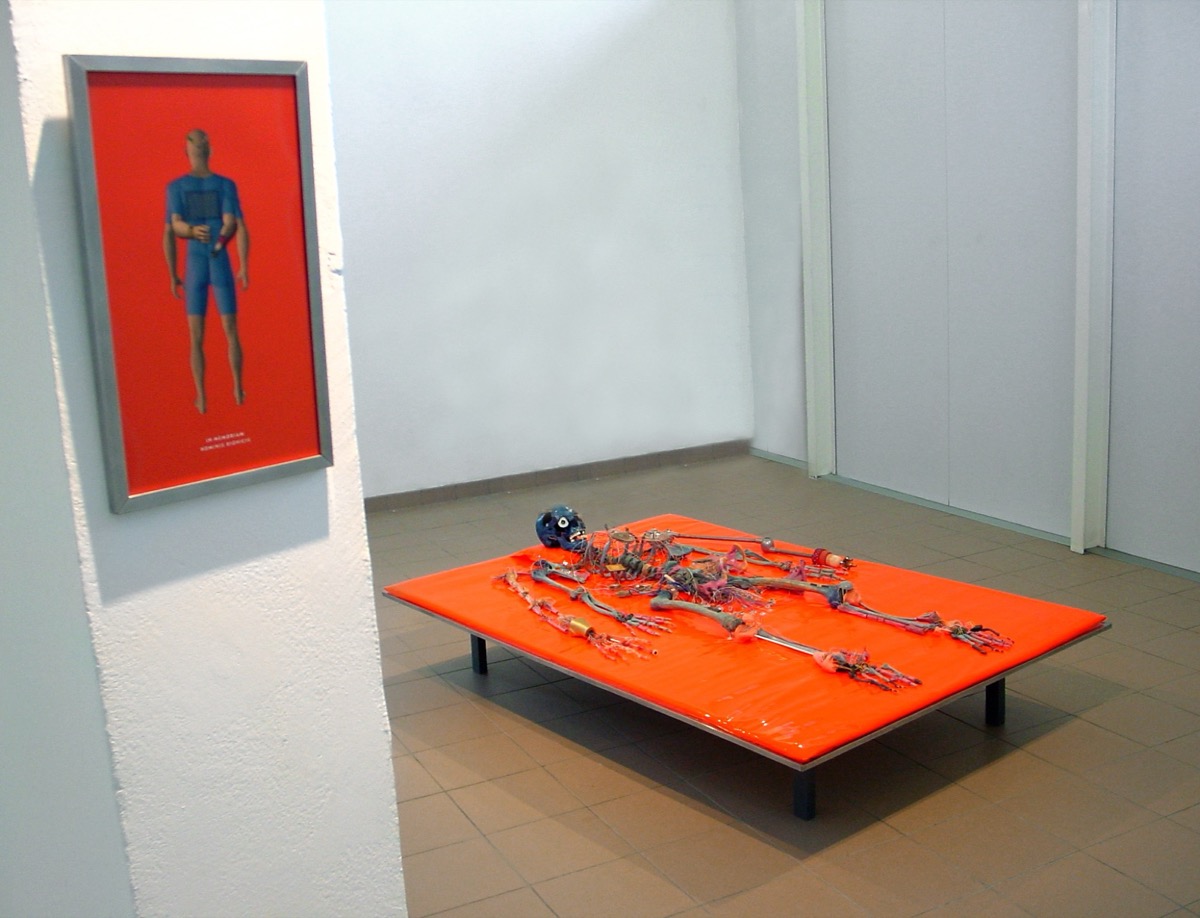
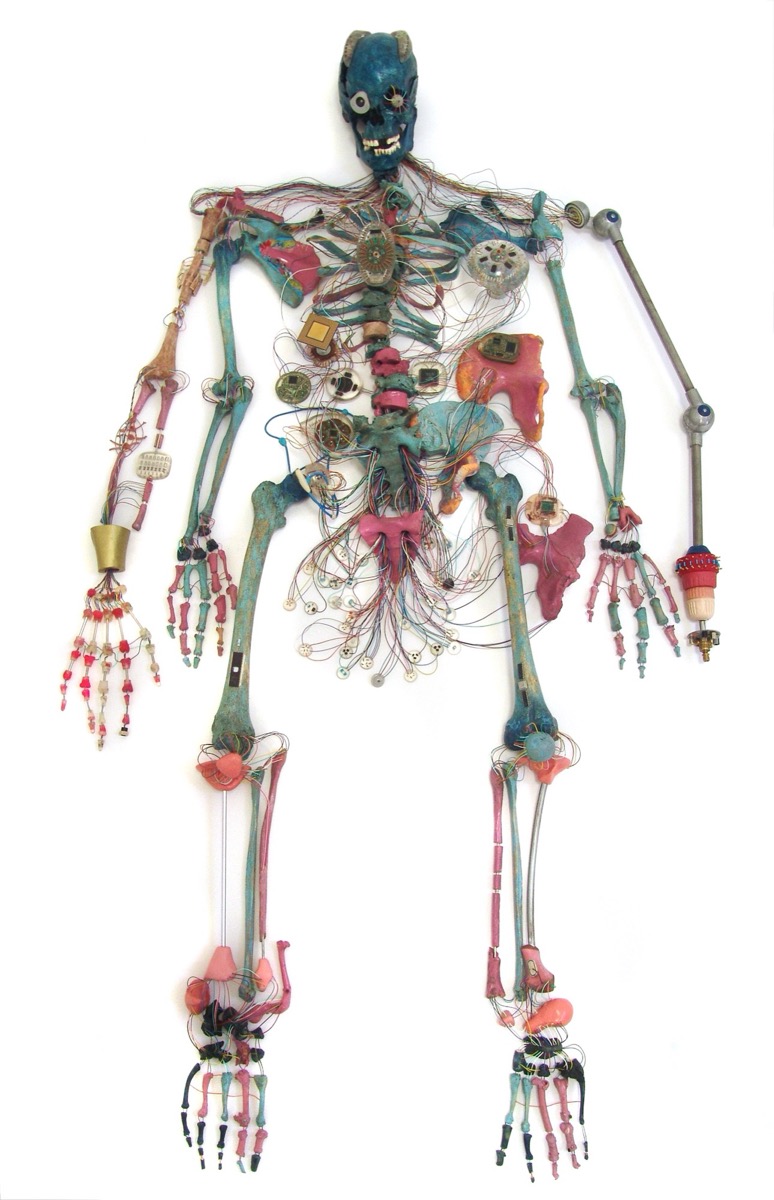
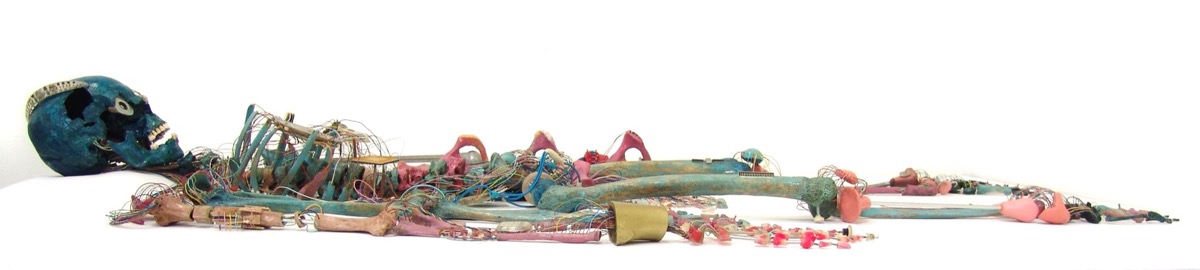
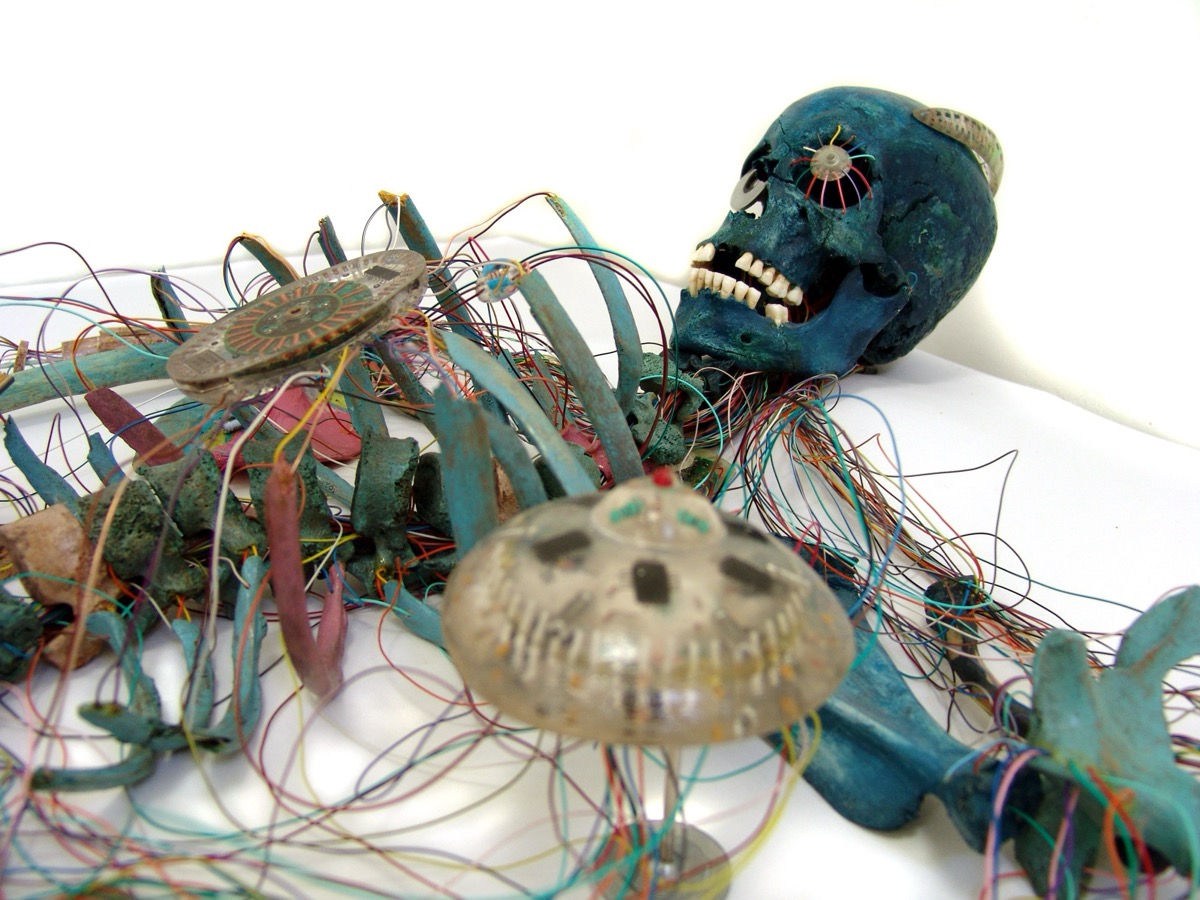
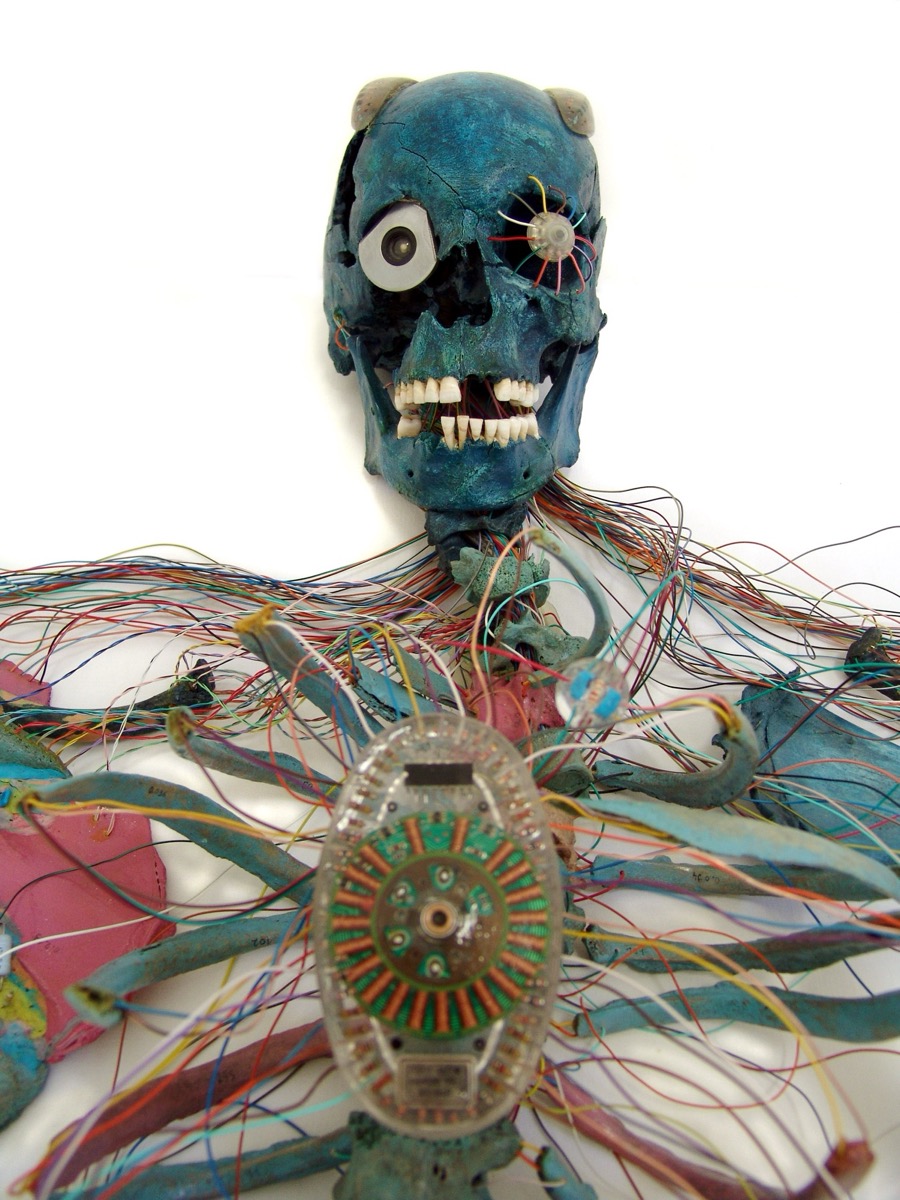
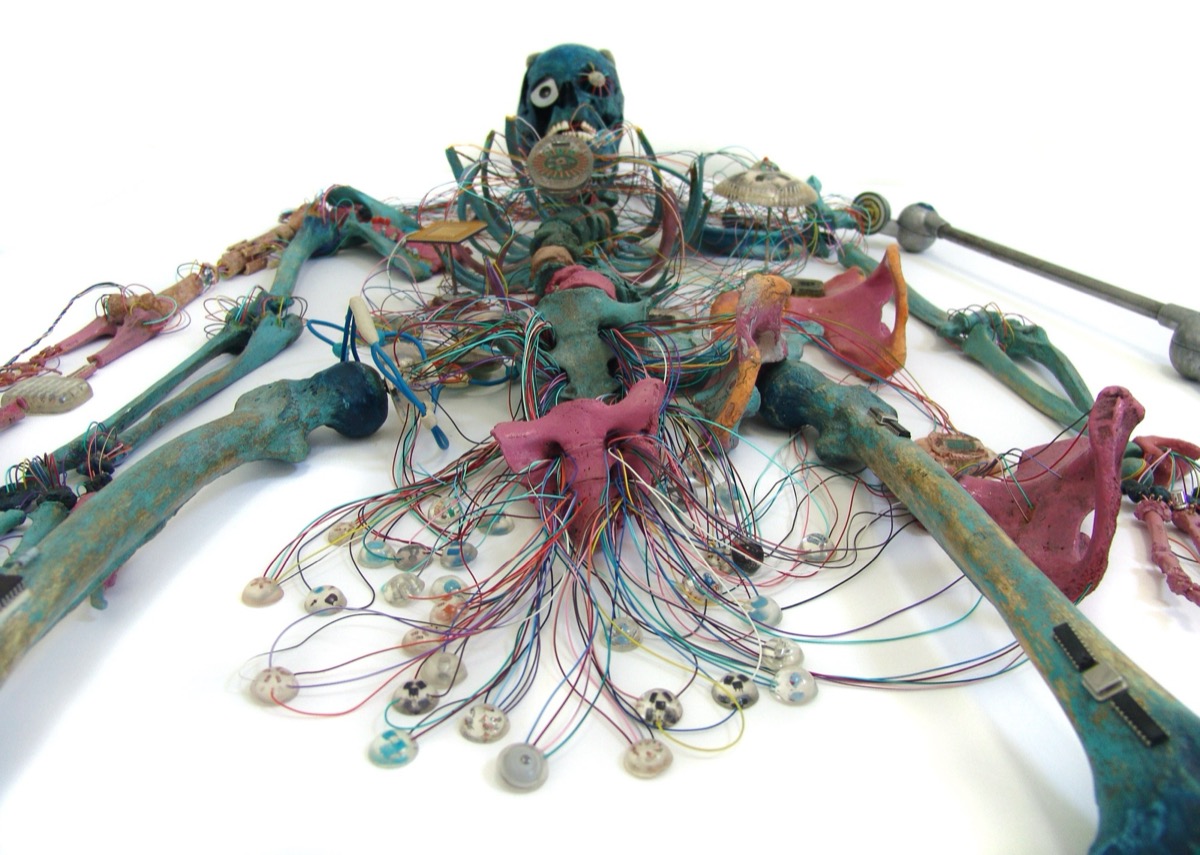
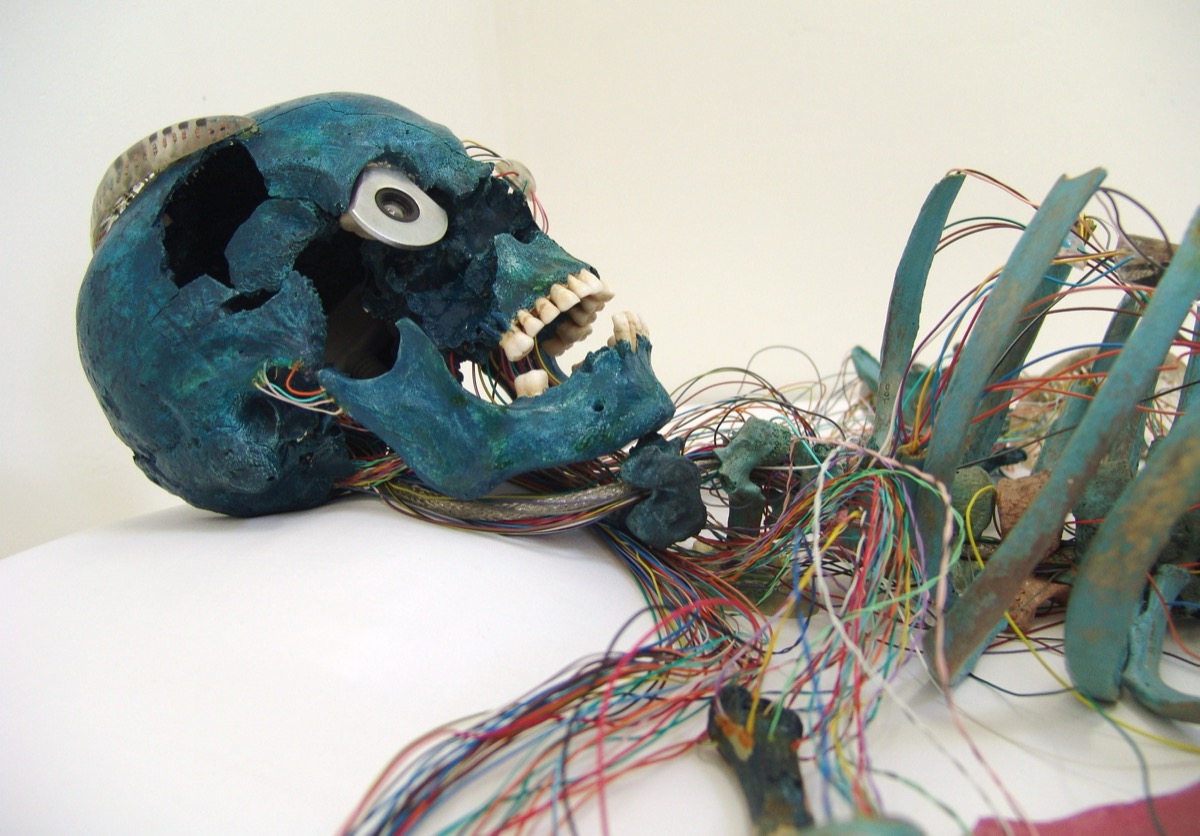
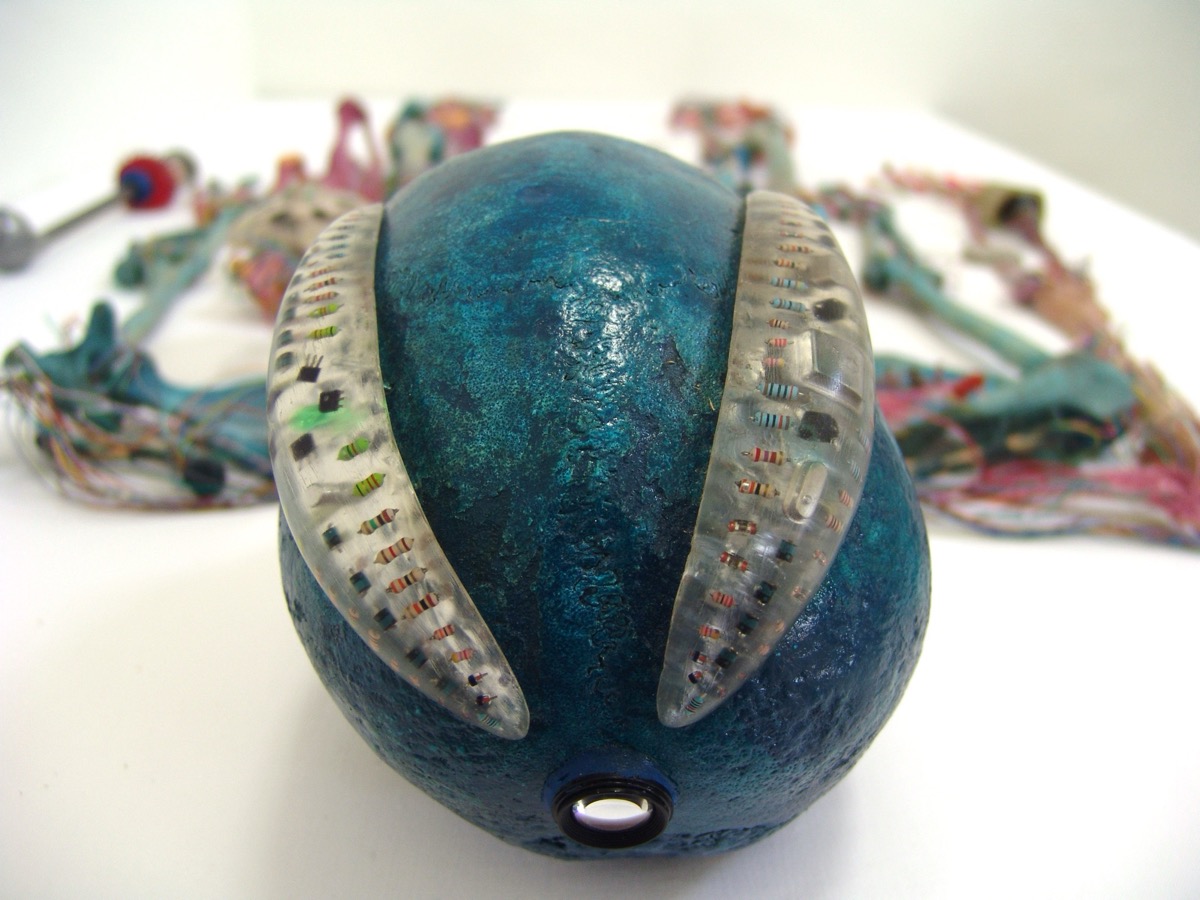
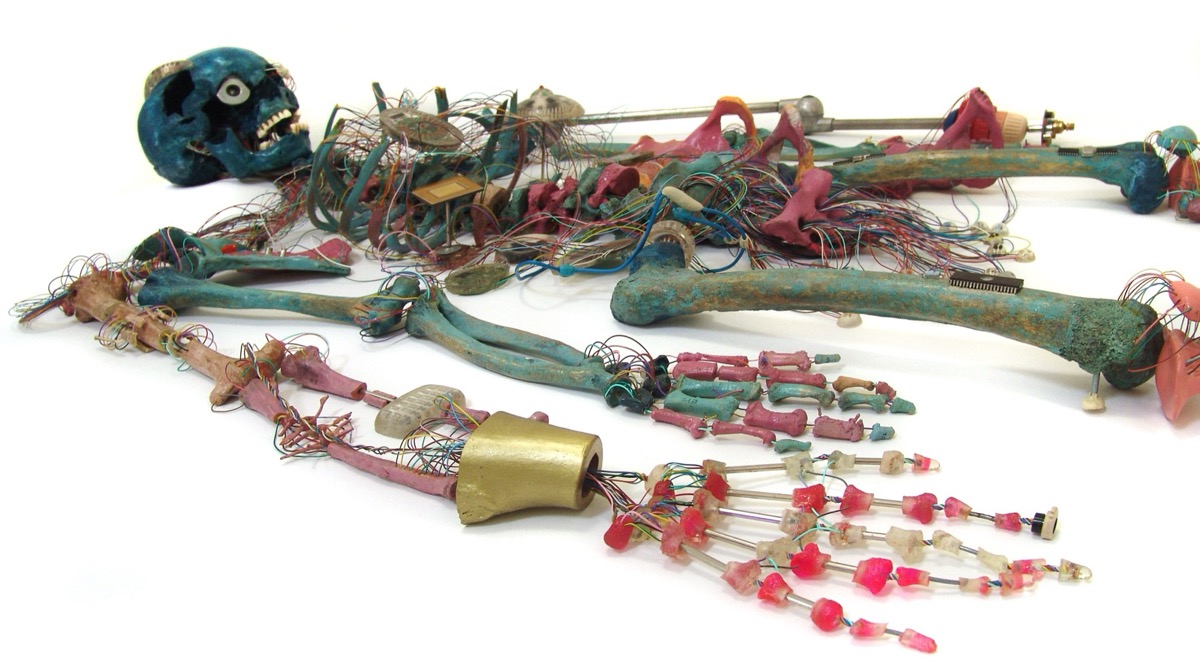
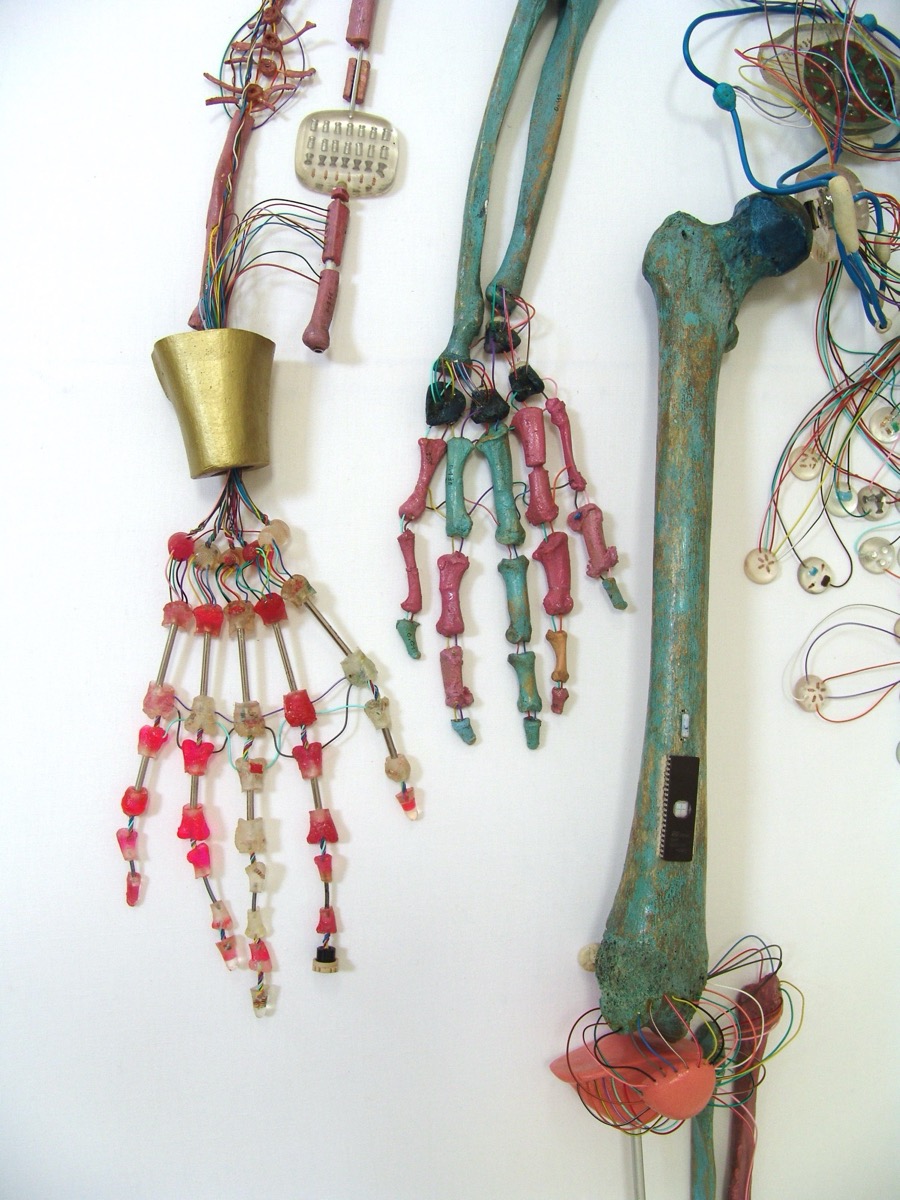
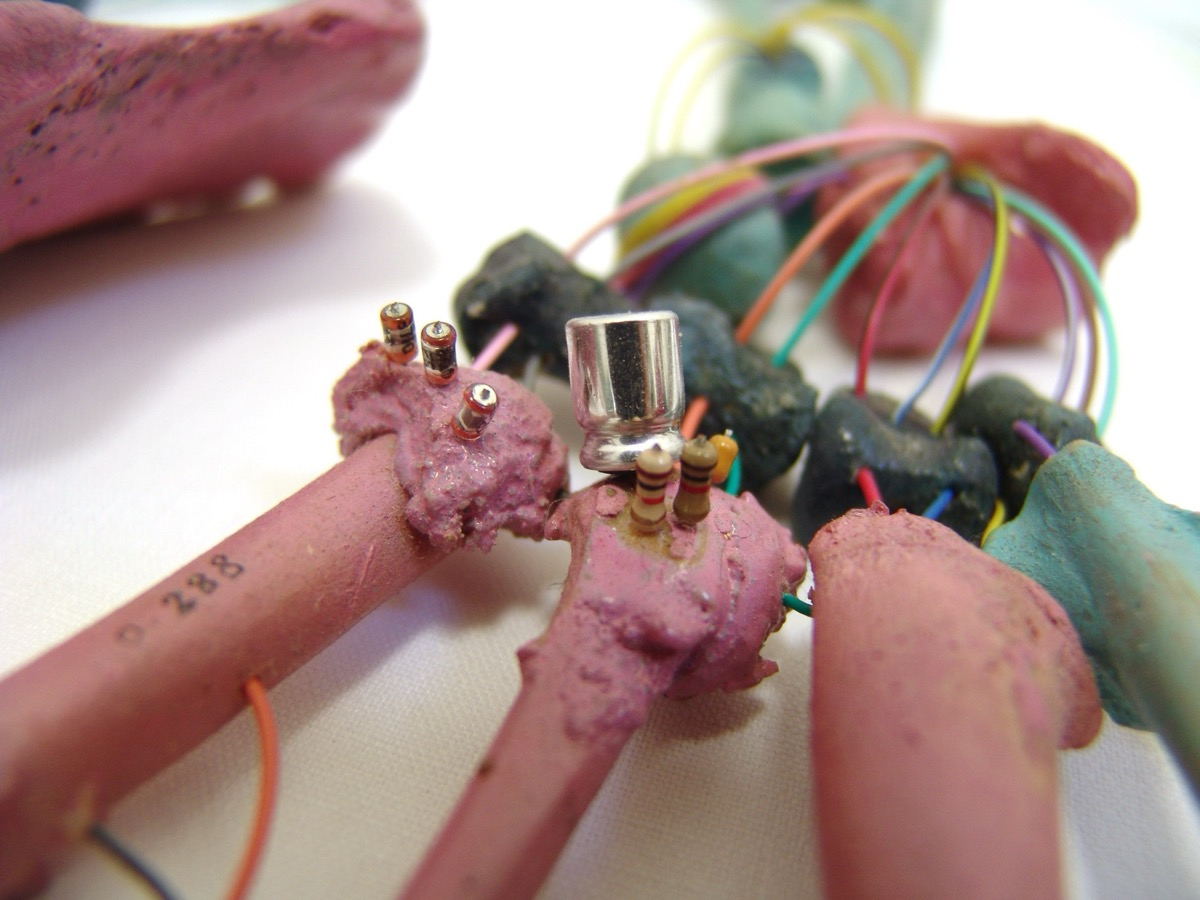
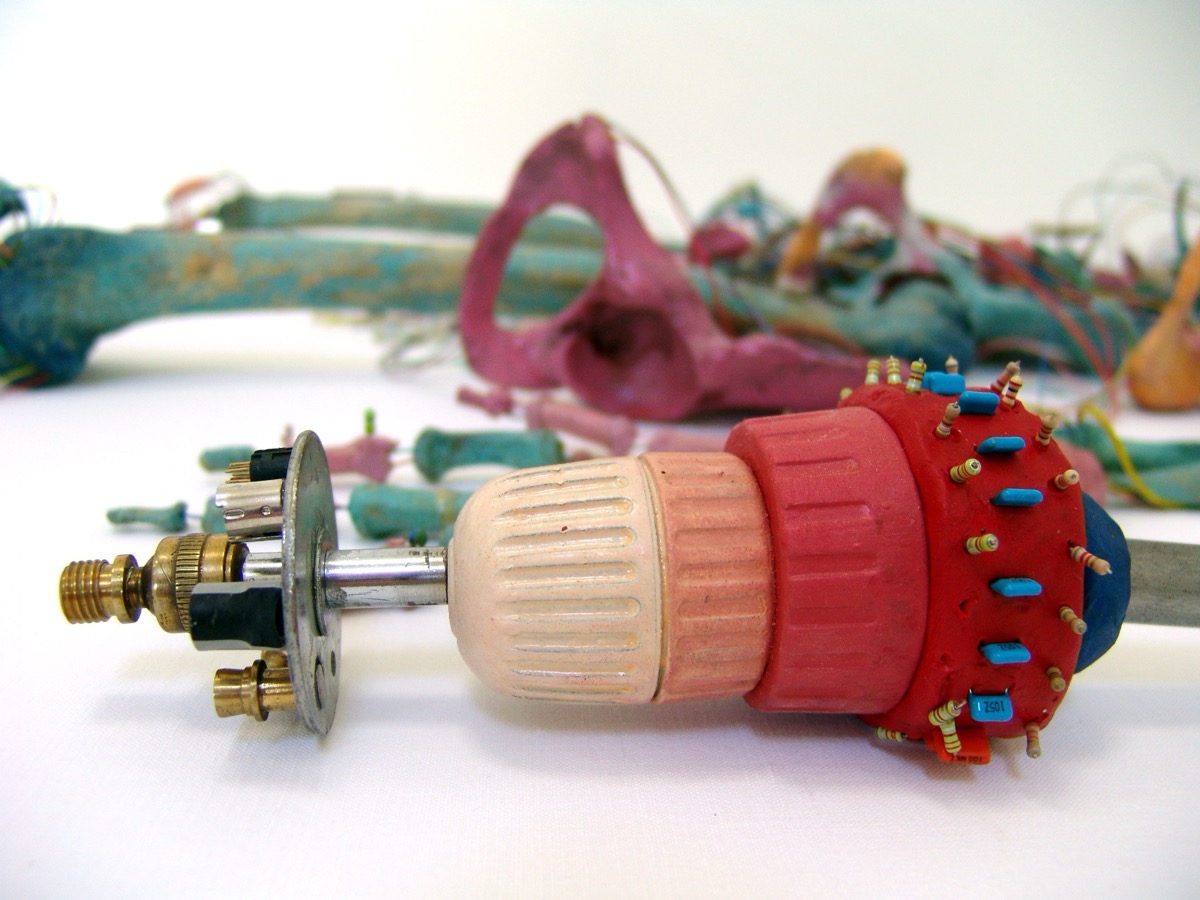
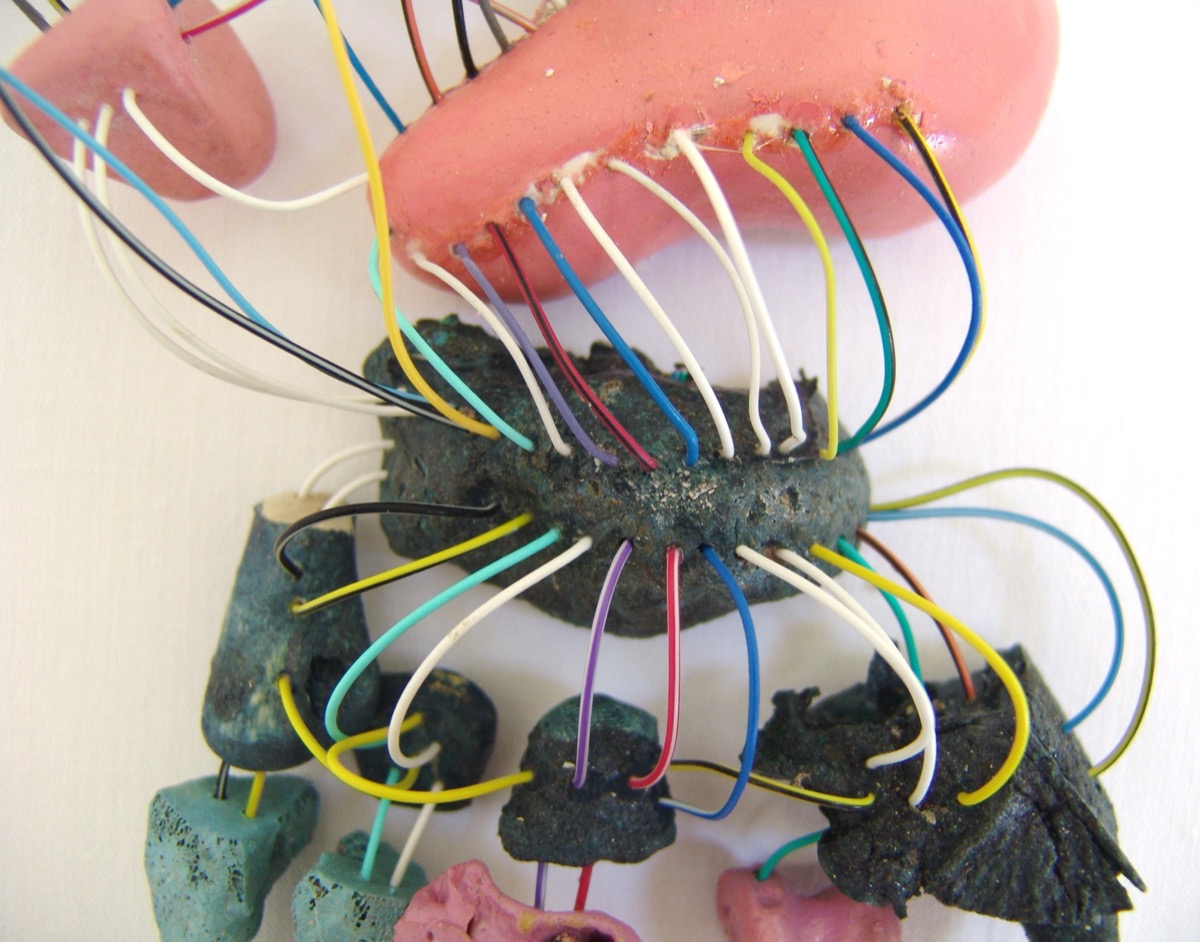
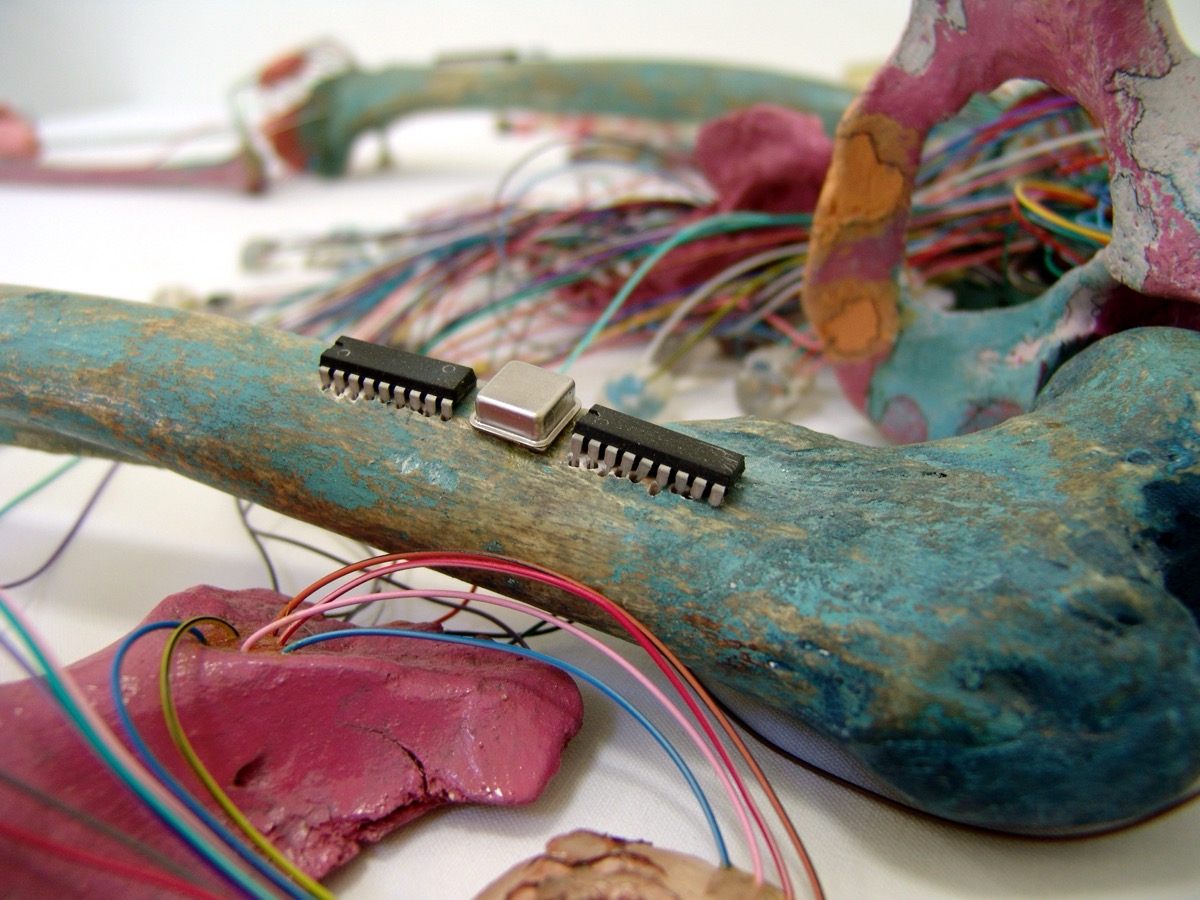
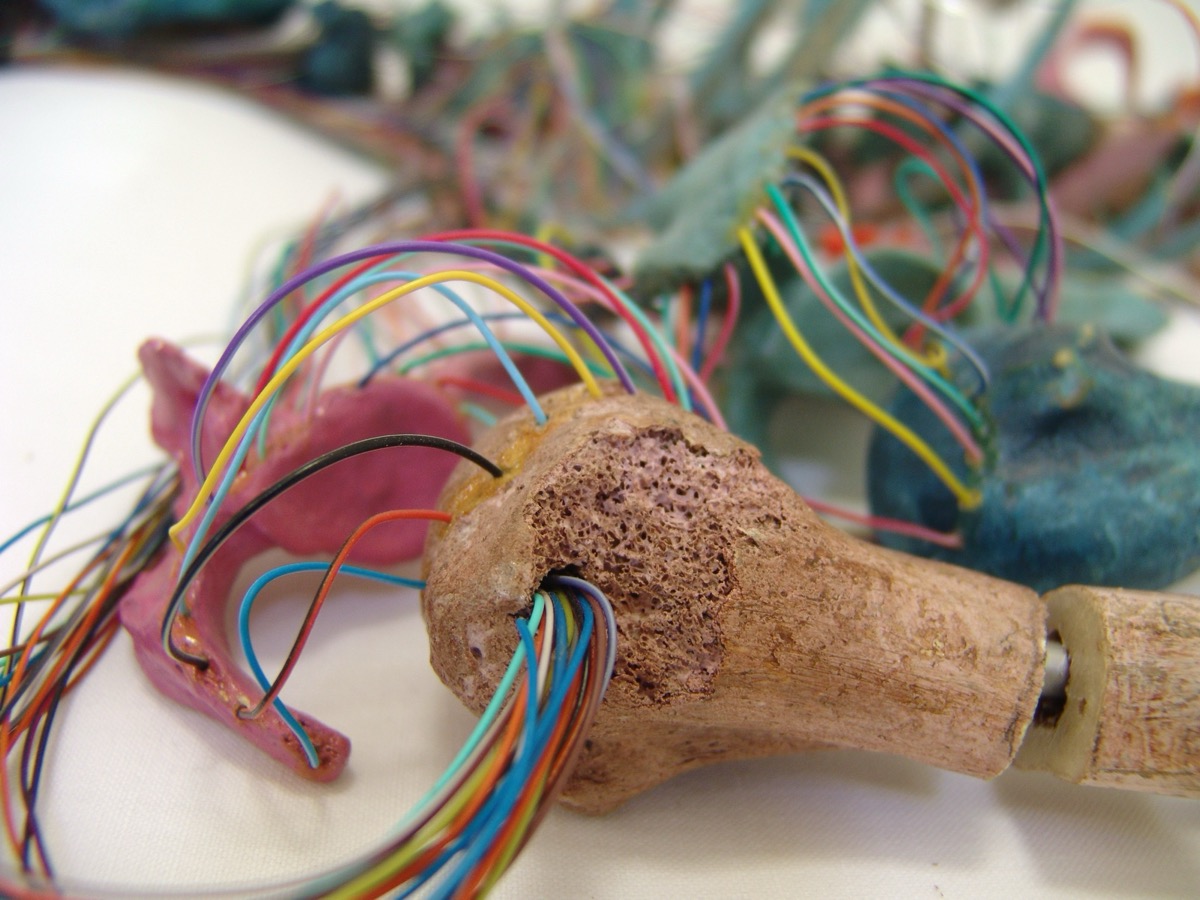
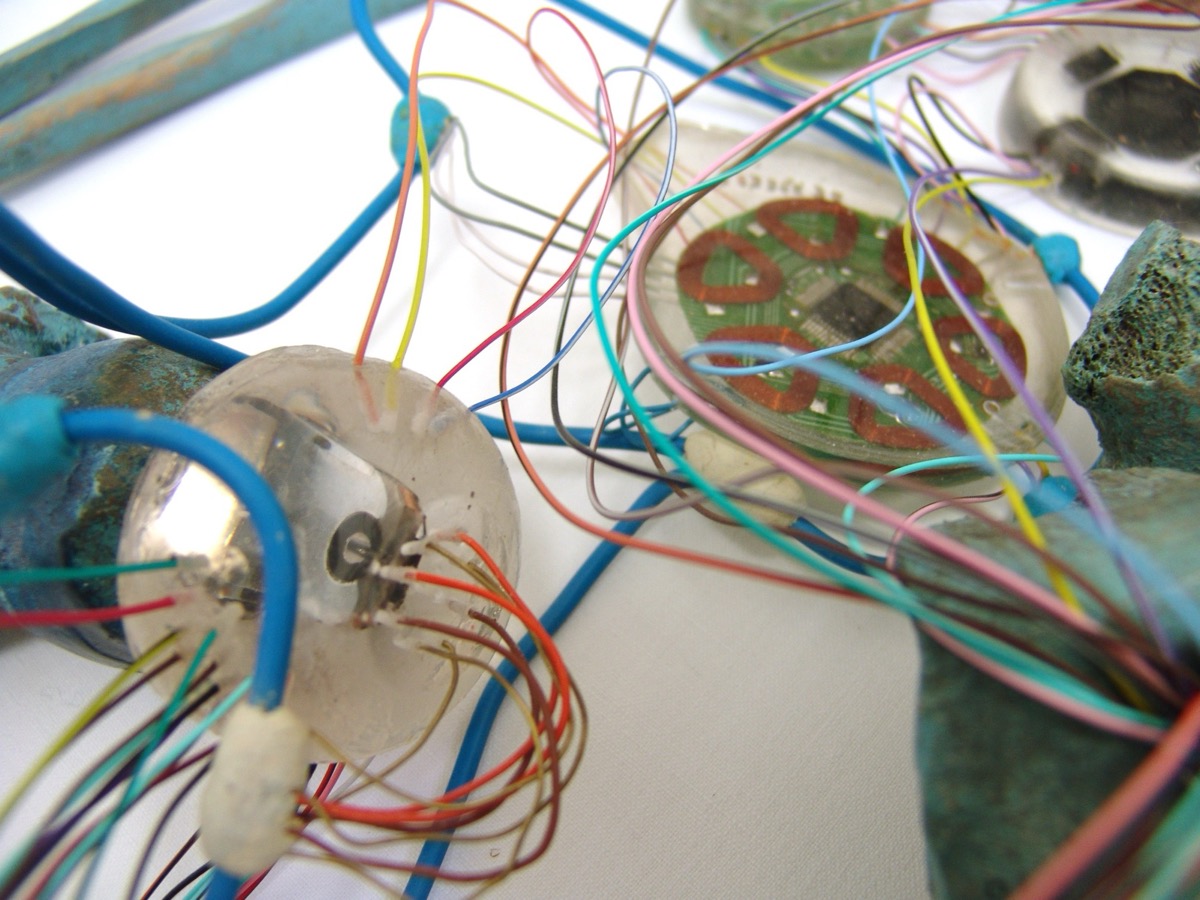
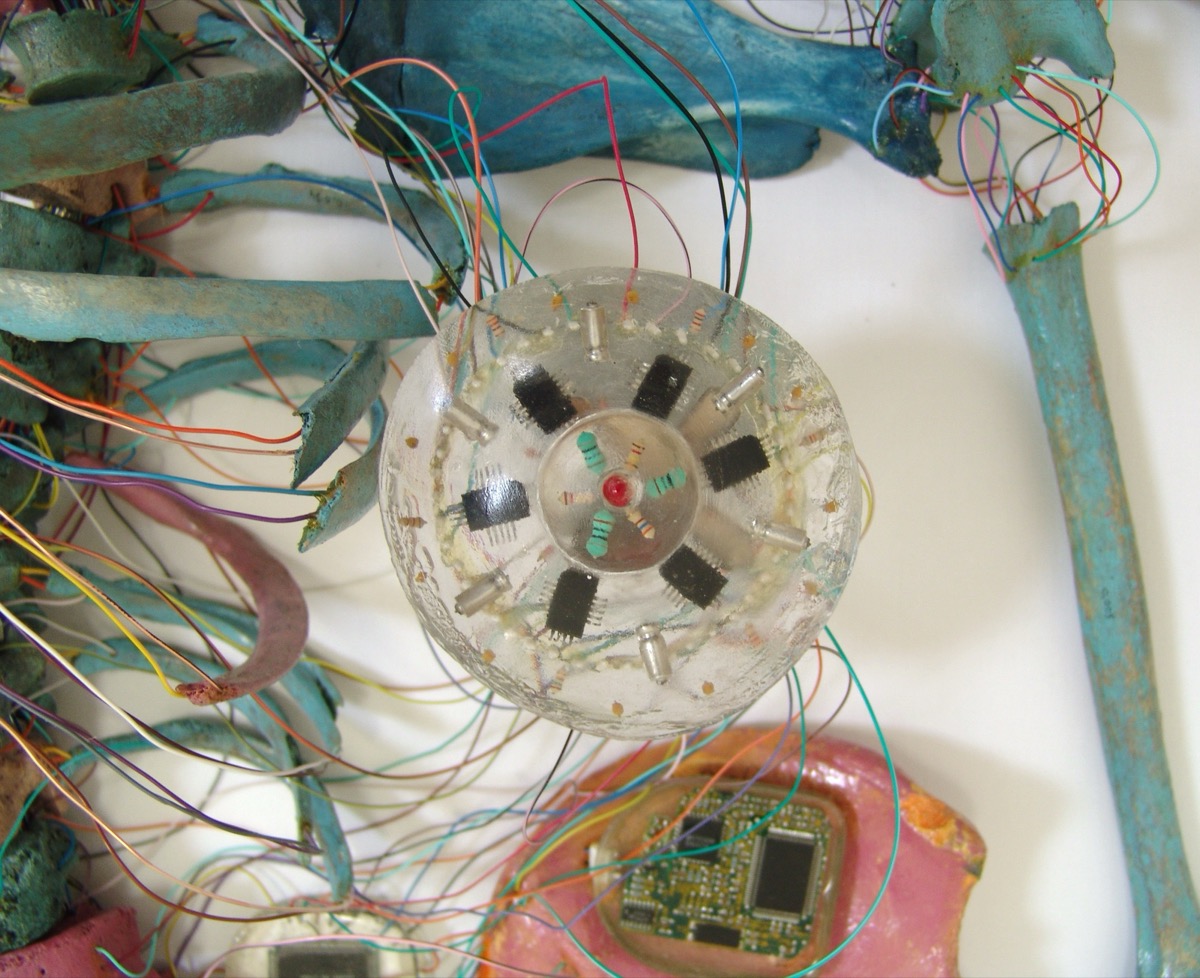
La Relique de l'Homme Bionique présente un squelette rendu monstrueux par l’insertion de prothèses électroniques et de synthèses. Ce mutant anonyme semble composé de plusieurs corps organiques et inorganiques. Il incarne les promesses et les limites de la recherche médicale et biotechnologique dans la création d’organes de substitution et la réparation du corps humain. Les fils apparents, semblables à un système nerveux externe, brouillent la frontière entre organisme vivant et machine, entre amélioration et dérèglement.

Partant du constat que l'humain contemporain demeure inabouti, cette pièce suggère les multiples voies possibles de transformation du corps — mais aussi leurs impasses. Cette relique contemporaine joue sur l'ambivalence entre l'apologie de la mutation nécessaire de l'humain, et la mise en garde face à l’échec potentiel de l’expérience bionique.

On ignore si cet "homme" est parvenu à se décorporer, à se transférer vers un support inorganique, ou si la tentative de mutation a échoué. Témoignage ambigu, cette relique pourrait aussi bien attester de la réussite du passage d’un corps charnel vers une autre forme d’existence que d’un échec bionique.

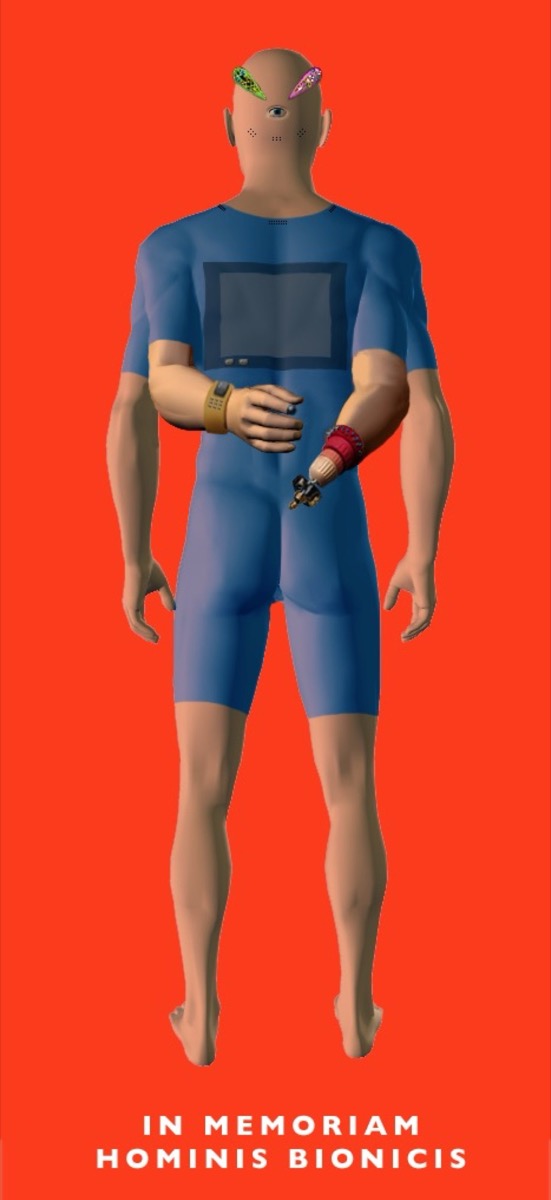
La Relique de l’homme bionique relève de l'archéologie du futur. Elle se présente comme un artefact spéculatif, dont la reconstitution 3D réalisée à partir de la relique suggère les difficultés de la projection passé / futur — une tentative d’approche des corps de demain à partir (des ruines) de nos projections technologiques.

The Relic of the bionic man presents a skeleton rendered monstrous through the insertion of electronic prostheses and synthetic elements. This anonymous mutant appears to be composed of multiple organic and inorganic bodies. It embodies both the promises and the limits of medical and biotechnological research in the creation of replacement organs and the repair of the human body. The exposed wires, resembling an external nervous system, blur the boundary between living organism and machine, between enhancement and dysfunction. 

Starting from the observation that contemporary humans remain fundamentally unfinished, the work suggests the many possible paths of bodily transformation—while also revealing their dead ends. This contemporary relic plays on the ambivalence between the advocacy of a necessary human mutation and a warning against the potential failure of the bionic experiment. 

It remains unclear whether this “man” succeeded in shedding his physical body to transfer himself onto an inorganic support, or whether the attempt at mutation failed. As an ambiguous testimony, this relic may attest either to the successful passage from a fleshly body to another form of existence, or to a bionic failure. 

The Relic of the Bionic Man belongs to the realm of future archaeology. It presents itself as a speculative artifact, whose 3D reconstruction—produced from the relic itself—highlights the difficulty of projecting past and future onto one another: an attempt to approach the bodies of tomorrow through the (ruins of) our technological projections.

Exhibited at :
2001 ​– Reliques humaines / Human Relics   – Galerie du Bellay, Rouen
2004 ​– Mutatis Mutandis – Musée d'Histoire de la Médecine, Paris
2006 ​– Eden ADN – Biennale de design​​, St-Etienne

Sculptures  SkinBag Graphics Onirika Performances Video - Web Photos